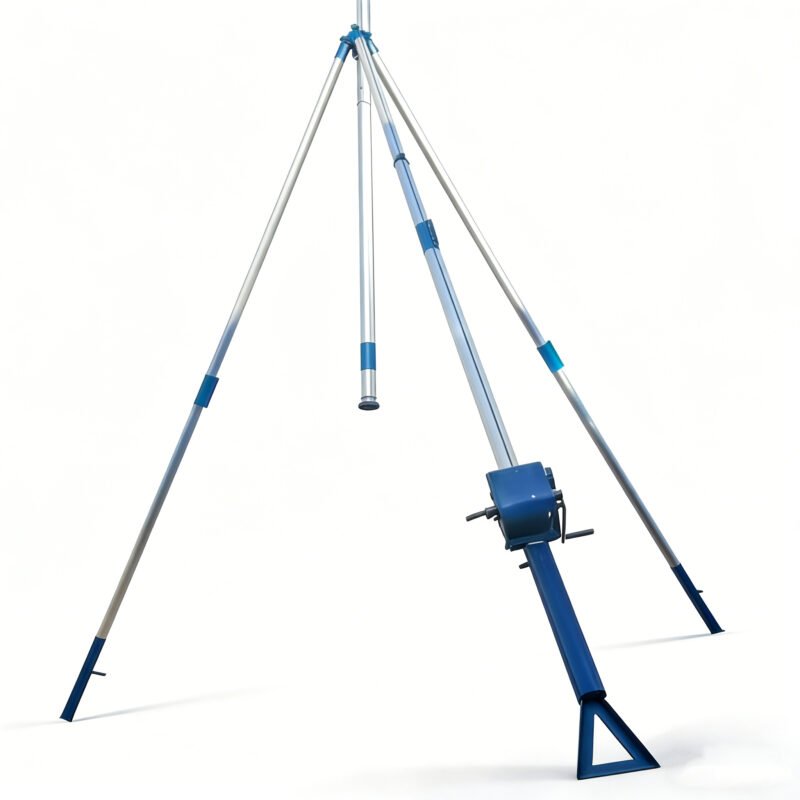
Rapid Deployment Emergency Restoration Tower for Temporary Line Recovery

Emergency Restoration Tower is built for fast utility response when an existing line support is damaged and service needs to be restored without waiting for a permanent replacement. It is commonly used after storms, structure failure, transport impact, fire damage, or other unexpected events that interrupt a transmission route. The goal is simple. Keep the recovery process moving, restore temporary line continuity, and help field teams regain control of the site as quickly as possible.
Fast Recovery for Critical Line Repairs
When a damaged line affects power delivery, time becomes the most important factor. An Emergency Restoration Tower gives utilities and contractors a practical temporary support option that can be organized and deployed much faster than a full permanent build. This helps crews respond with more flexibility in urgent conditions. It also helps reduce downtime during emergency restoration work, especially when the permanent structure is still being assessed, designed, or scheduled for replacement.
Designed for Efficient Field Deployment
Field work often happens in difficult locations. Access roads may be limited, weather may be poor, and the work area may still be unstable. That is why an Emergency Restoration Tower is often chosen for jobs that need a fast, manageable solution in real site conditions. A modular layout supports easier transport, staging, and on-site assembly. Crews can organize work more clearly, reduce unnecessary delay, and focus on restoring line support with a structure made for urgent deployment rather than long construction cycles.
Stable Support for Temporary Transmission Needs
Temporary restoration does not mean informal restoration. The structure still needs dependable performance while the network is being stabilized. An Emergency Restoration Tower is used to provide that temporary support during line rerouting, bypass work, damaged tower replacement, and emergency corridor recovery. It gives utilities a stronger way to bridge the gap between failure and permanent repair. This makes it valuable not only in disaster response, but also in planned recovery strategies where service continuity matters.
Useful Across Utility and Contractor Operations
This product fits a wide range of users, including grid operators, power contractors, transmission maintenance teams, and emergency response specialists. It can support restoration planning after natural disasters, industrial accidents, or local structural failure. It is also useful when crews need to rebuild access to a line route in stages. Because the Emergency Restoration Tower supports temporary line work with a clear operational purpose, it is a practical solution for organizations that need speed, structure, and better control in recovery projects.
A Practical Choice for Ongoing Restoration Readiness
For companies that prepare for urgent line events in advance, this type of product strengthens restoration readiness. It helps create a faster response plan and gives teams a more direct path from damage assessment to temporary support. That is why the Emergency Restoration Tower remains a valuable part of emergency utility planning. It supports quick action, organized field execution, and more efficient temporary restoration when every hour counts.
Main Technical Parameters
| Item Number | 04111 | 04112 | 04121 | 04122 | 04123 |
| Model | LTQ110S | LTQ110Me | LTQ220Me | LTQ220MeA | LTQ220MeB |
| Applicable Voltage (kV) | 110 | 110 | 220 | 220 | 220 |
| Height (m) | 15.1 | 15.5 | 18.5 | 24 | 24 |
| Section Size of Frame Girder (mm) | 450 | 400 | 400 | 500 | 500 |
| Vertical Span (m) | 280 |
350 |
650 | 450 | |
| Horizontal Span (m) | / |
300 |
500 | 400 | |
| Applicable Conductor | LGJ240 | LGJ240 | LGJ400 | LGJ400 | 2×LGJ400 |
| Distance between Conductors (m) | 4.5 | 4.5 | 6.5 | 7.5 | 8 |
| Weight (kg) | 630 | 960 | 1370 | 2220 | 2910 |
WebLink:
Internallinking:
Shop